As we reach global warming of 1.4 °C, there are clearly emerging signs of significant damage from climate change, as expected if the impacts climb strongly after 1.5 °C.
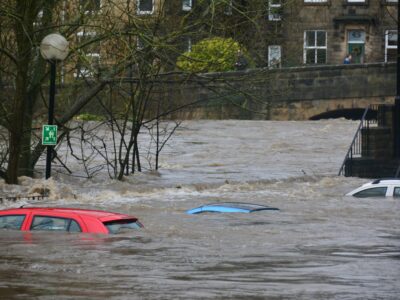
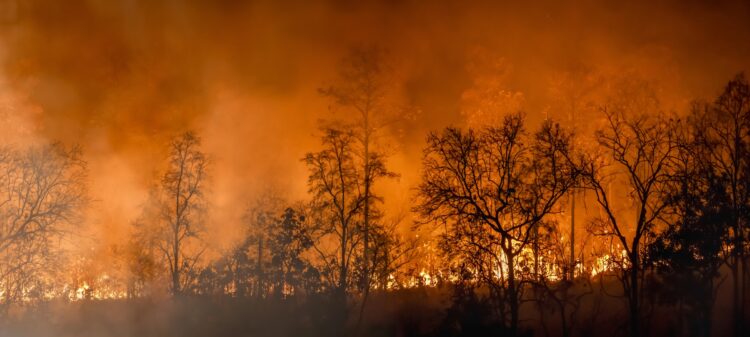
Climate change affects the frequency of droughts, floods and wildfires as well as changing the strength and timing of the seasons and, on longer time scales, alters sea level and ocean currents. These changes, in turn, impact agriculture, wildlife and human health. The only questions is, what level of climate change is required for these impacts to be considered dangerous rather than merely inconvenient?
Those who would like us to sit on our hands and do nothing are strangely quiet on this question. In contrast, climate scientists give a clear answer. They reported, in 2018, that serious consequences will accelerate rapidly between 1.5 °C and 2.0 °C.
Eight years after that report, warming Is close to its lower limit with a temperature rise, in 2025, of more than 1.4 °C above pre-industrial levels. So, if the climate scientists are right, we would expect significant impacts to be beginning to emerge. They are!
Wild fires have seen a doubling of the susceptible area of Earth’s surface between 1979 and 2013. Almost wherever you live in the world, the number of heatwave days has tripled since the 1950s whilst the duration of floods has increased by a factor of 2.5. The cost of all this damage is now starting to climb with climate-related insurance claims totalling $600 billion over the past two decades.
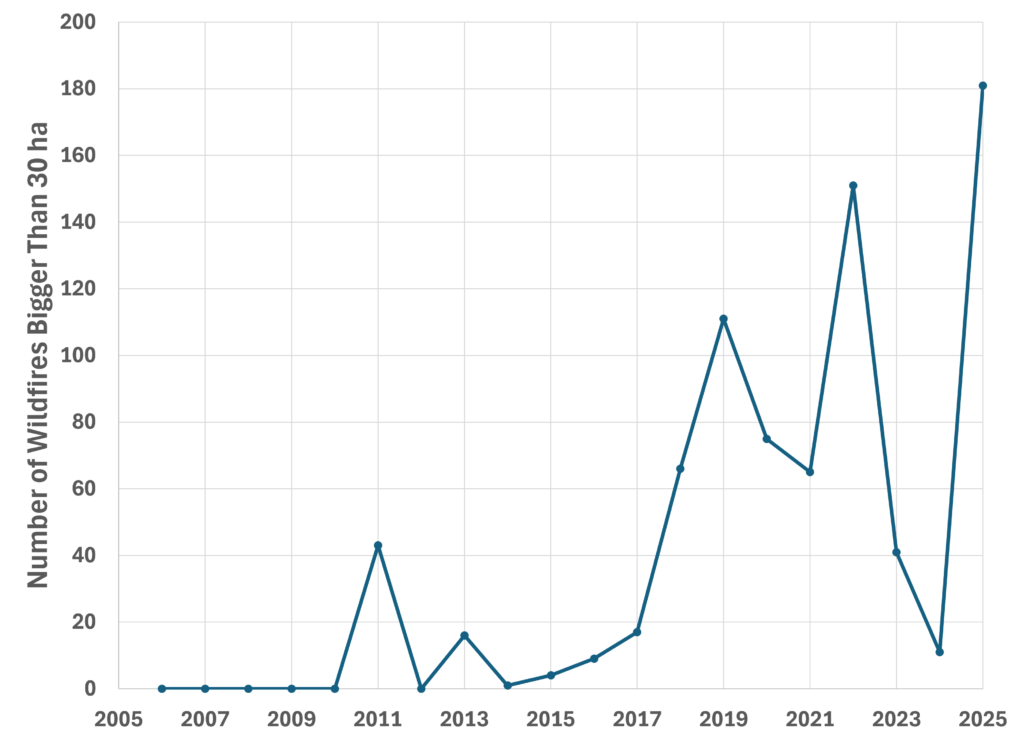
As just one of hundreds of possible illustrations of how fast the dangers are increasing, the graph below shows how many wildfires the UK has suffered over the last 20 years. Before 2011 we didn’t have any. Now we often have hundreds in a year.
The impacts of climate change will inevitably worsen as temperatures rise further. But it would be a mistake to assume it will just be a slight worsening of the same issues. It’s likely that our planet will encounter tipping points where there are large, irreversible changes such as slowing of ocean currents, ice-shelf collapse and global loss of coral reefs causing catastrophes such as food shortages on a scale never before seen in human history.